

7 Spooky Things Nobody Tells You About Pregnancy
Spooky season is upon us! As Halloween approaches, we thought we’d take a moment to revel in the “spooky” side of pregnancy and some of the horrors your body may face during pregnancy and beyond.

Spooky season is upon us! As Halloween approaches, we thought we’d take a moment to revel in the “spooky” side of pregnancy and some of the horrors your body may face during pregnancy and beyond.
Prepare to be spooked! Here are seven frightening things no one tells you about pregnancy....
Peeing your pants is a new norm.
If you sneeze, laugh, jog - or really do any activity with force - you may notice your bladder slipping out of control. It’s totally normal, and yet can be freaky to get used to.
Bloating, gas, and burps galore.
Consider it your body’s way of saying “Boo!” In the months leading up to labor, you might experience more excess bloating, gas, and burping than normal.You might poop during labor.
Seriously...and your doctor may not tell you if you have. If you’ve taken an epidural, you may not be able to even feel yourself doing it. And with all of the pressure being placed on your pelvis during labor, it’s a totally normal phenomenon.Prepare to tear…
Beware of vaginal tearing! During a vaginal birth, it’s common for vaginar tears to occur. Following labor, your doctor will insert stitches if you’ve experienced tearing, which will take a few weeks to fully heal.Your breasts may leak before and after birth.
As your body prepares to produce breast milk, you may notice drops of thick, creamy fluid called colostrum inside of your bra or shirt. Don’t fret! This will taper off as your body begins to regulate its supply of milk.And you may lose some hair…
Postpartum hair loss is REAL. When you brush your hair post-birth, you may be startled to see chunks of hair coming out in your brush. As spooky as this can seem, please know that it’s totally normal for new moms to experience hair loss in the first few months following birth. And the hair will almost always grow back!You might need bigger shoes.
As strange as it may sound, many expecting mothers experience foot growth (sometimes an entire shoe size bigger) due to a mixture of foot ligaments spreading out, fluids being retained in the feet, and added baby weight. This can sometimes be permanent, so you may need to consider upping your shoe size!
As frightening as these aspects of pregnancy and postpartum can seem in the moment, the magic that follows in the moments with your baby make it all worthwhile.
Are you an expecting mother nearing your third trimester? Read our recent blog post to learn about 10 things you can expect in your final trimester of pregnancy.
Wishing you and yours a happy and safe Halloween from the Cincinnati Birth Center team!

The Highs and Lows of Pregnancy (As seen on TV)
From the messy to the magical - pregnancy is full of highs and lows that any woman who has been through it can relate to. You may have grown up watching pregnancy played out on TV in different ways, highlighting the highs, lows, and woes that pregnant women often face as their body and lifestyle begins to change. While the media can often exaggerate aspects of pregnancy, it also highlights countless oh-so-real emotions and experiences that pregnant women face.
From the messy to the magical - pregnancy is full of highs and lows that any woman who has been through it can relate to. You may have grown up watching pregnancy played out on TV in different ways, highlighting the highs, lows, and woes that pregnant women often face as their body and lifestyle begins to change. While the media can often exaggerate aspects of pregnancy, it also highlights countless oh-so-real emotions and experiences that pregnant women face.
From TV shows to movies, can you relate to any of these famed pregnant personalities?
When you first find out you’re pregnant and can’t wait to share the news.
Then you start learning more about childbirth and what happens to your body during labor...
...And you begin taking all of your recommended supplements.
When all you want is chocolate but you’re supposed to be eating a nutritious diet...
...so you begin finding new ways to balance your cravings with your growing belly.
When your partner asks why you’re so tired all the time...

And everyone you encounter insists on touching your bump.
When the third trimester hits hard and you lose all control...
...and you’re officially ready for pregnancy to be over (like yesterday).
When you start to feel optimistic as your due date gets closer...
...and then you go into labor...
But realize it was all worth it once you look down at your newborn’s face.
While pregnancy isn’t always quite as glamorous or messy as the media makes it out to be, there are certainly some laughable and relatable moments to be drawn from TV’s famed pregnant characters.
So tell us, can you relate? If so, share this blog post on social media and tag a friend who might find these moments all too #relatable .

10 Things To Expect In The Third Trimester
The third trimester marks both an exciting and a daunting milestone - you’re just a few months away from meeting your new baby and your body is rapidly changing to prepare for birth. We know how nerve-racking the third trimester can feel at times - especially for first-time mothers - so we’re sharing common things you can likely expect during your final weeks of pregnancy.

If you’re reading this, you’re likely curious what you can expect in the weeks or months ahead as you enter your third trimester of pregnancy. The third trimester marks both an exciting and a daunting milestone - you’re just a few months away from meeting your new baby and your body is rapidly changing to prepare for birth. We know how nerve-racking the third trimester can feel at times - especially for first-time mothers - so we’re sharing common things you can likely expect during your final weeks of pregnancy.
What is the third trimester?
Typically the 28th through 40th weeks of pregnancy are considered to be the third trimester, or the “home stretch” of pregnancy. Your fetus is nearing full development and your body is preparing for childbirth. During these last few months of pregnancy, your baby will grow rapidly and develop their bones, hair, skin, nails, senses, digestive system, and brain.
10 Things To Expect In the Third Trimester
During your last few months of pregnancy, you can expect your body to change even further in preparation for childbirth. You may experience changes in your hormones, mood, body shape, energy levels, and more. While every woman’s body is unique and experiences the third trimester differently, there are a handful of commonalities that you can likely expect to experience during your third trimester:
1. Braxton Hicks contractions
These “practice contractions” may begin occurring in the weeks leading up to labor as your body prepares itself for birth.
2. Lack of bladder control
With all of the extra weight being placed on your pelvic floor as the baby grows, it’s completely normal to feel less in control of your bladder and have to pee more often.
3. Stretchmarks
As your body continues to grow with the baby, you may notice tiny tear marks along your skin called, “stretch marks.” Moisturizing regularly can help to minimize their appearance.
5. Decreased Libido
With horomone levels rapidly changing, it’s common for women to experience a decrease in their sex drive (Libido) during the first and third trimesters of pregnancy.
6. Varicose Veins
Bulging veins, including hemorrhoids, may appear along your lower body due to the extra blood your body is pumping. These are likely to disappear post-pregnancy.
7. Backaches
If your back wasn’t aching already, it may begin during the third trimester. Many women report backaches due to their belly propelling their bodies forward, placing more pressure on their joints and spine.
8. Leaky nipples
A fluid called Colostrum may begin leaking from your breasts. This is your body’s way of warming up to prepare for breastfeeding your baby.
9. Heartburn and constipation
During your last few weeks of pregnancy, your uterus will be pushing on certain organs, like your stomach and intestines, which can cause discomfort such as persistent heartburn and constipation. If you find yourself struggling to manage these issues, consult with your primary care physician to explore remedies that are safe to use during pregnancy.
10. Swelling
You may notice increased swelling in your hands, face, and ankles. This is called Edema and is due to the extra fluids your body is retaining.
The final weeks of pregnancy can feel daunting, but know that you don’t have to face it alone. A midwife and doula can help to ensure you feel safe, supported, and encouraged throughout every step of your pregnancy journey.
Have questions about our midwifery services at the Cincinnati Birthing Center? Contact us to book a free discovery call with our team to learn more.
SOURCES
“3rd Trimester Pregnancy: What to Expect.” Mayo Clinic, Mayo Foundation for Medical Education and Research, 27 Feb. 2020, https://www.mayoclinic.org/healthy-lifestyle/pregnancy-week-by-week/in-depth/pregnancy/art-20046767.
Bellefonds, Colleen de. “Your Guide to the Third Trimester of Pregnancy.” What to Expect, What to Expect, 5 Sept. 2018, https://www.whattoexpect.com/third-trimester-of-pregnancy.aspx.
“The Third Trimester.” Johns Hopkins Medicine, Johns Hopkins Medicine, https://www.hopkinsmedicine.org/health/wellness-and-prevention/the-third-trimester.
The Ultimate Guide to Working Out While Pregnant
Working out while pregnant has become one of those “talked about taboos,” sparking even more questions than answers. Our team at the Cincinnati Birthing Center is here to weigh in on the topic and give you our best advice for a healthy pregnancy.
When it comes to preparing for motherhood, there are many mixed opinions and pieces of information about what you should or shouldn’t do. Whether you’ve sought out info yourself or have received advice from others, you’ve likely been told a thing or two that’s made you question what to believe. Working out while pregnant has become one of those “talked about taboos,” sparking even more questions than answers. Our team at the Cincinnati Birthing Center is here to weigh in on the topic (no pun intended) and give you our best advice for a healthy pregnancy.
Working Out While Pregnant: The Basics
The American College of Obstetricians and Gynecologists (ACOG) recommends that pregnant women exercise for 30 minutes a day, 5 days a week throughout the entirety of your pregnancy. This includes any kind of physical activity, including day-to-day activity such as housework, walking, etc.
Working out regularly during pregnancy can help you to:
Decrease your risk of gestational diabetes, preeclampsia, and cesarean delivery
Reduce back pain
Ease constipation
Improve your overall fitness, heart, and blood vessels
Lose baby weight more quickly one your baby is born
Of course, every woman’s body is different and you should consult with your doctor before pursuing strenuous physical activity.
Working Out While Pregnant: Common Myths
In addition to all the factual advice that exists about physical activity while pregnant, there are a great deal of misconceptions and myths about what’s healthy. Some common myths are:
Myth #1: You should keep your heart rate under 140 beats per minute (BPM).
False! Unless your doctor has recommended sticking to low intensity exercises such as walks, yoga, and light weights, it’s perfectly fine (and healthy) to get daily, moderate exercise in. In fact, exercising moderately and regularly can help you cope with labor and maintain a higher stamina.
Myth #2: It’s not safe to run during pregnancy.
If you’re an experienced runner, you can absolutely continue to run regularly as long as you stick to level terrain, limit your distance, and are cautious with your ligaments and joints so as not to fall or experience an injury. While you shouldn’t overexert yourself while pregnant, you can still maintain your workout routine.
Myth #3: You can’t exercise your core during pregnancy.
It is perfectly safe to perform traditional ab exercises throughout the entirety of your first trimester of pregnancy. Following the first 12-14 weeks, you’ll need to avoid lying flat on your back to minimize risk of restricting circulation to you and your baby. However, you can continue to workout your core using modified core exercises (Find some examples here).
How to Safely Workout While Pregnant (And Exercises To Avoid)
As we’ve mentioned, there are many ways to safely workout while pregnant. However, every woman’s body and pregnancy is unique, so it’s important to understand how to safely workout and what exercises to avoid.
For starters, certain conditions can make exercise during pregnancy increasingly risky. Consult your doctor on whether or not you should exercise if you have::
Severe anemia during pregnancy
Preeclampsia or pregnancy-induced high blood pressure
Chronic lung or heart conditions
Are pregnant with multiples or are at risk of premature labor
Placenta previa after 26 weeks of pregnancy
If you don’t have any existing conditions, make sure you know what warning signs to look for when you exercise. If you experience any of the following, call your doctor immediately:
Feeling dizzy or faint
Vaginal bleeding
Chest pain
Muscle weakness
Headaches
Regular, painful contractions of the uterus
Calf pain or swelling
Vaginal fluid
It’s also important to note what exercises are NOT safe during pregnancy. In general, we recommend avoiding contact sports and activities that risk any kind of hit to the abdomen area. You should also avoid activities that may result in falling, such as skiing, gymnastics, surfing, and horseback riding. Hot yoga and hot pilates are also not recommended, as they could cause you to become dizzy and overheated. Lastly, avoid activities that are at an elevation of over 6,000ft, such as hiking.
Working Out While Pregnant: Our Recommended Exercises + Workout Wear
Some of the best workouts you can do while pregnant include swimming, walking, and running. You can also join aerobics, kickboxing, indoor cycling, barre, and pilates classes for group-oriented activities.
No matter what workout routine you choose to pursue, make sure you’re drinking plenty of water throughout your workout. Ideally, you should start drinking water 30-45 minutes before starting your workout and should continue sipping plenty of water during and after your workout.
As for maternity workout wear, you’ll want to make sure you choose clothing that leaves you feeling supported and comfortable. A supportive sports bra, loose fitting top, and elastic leggings are generally what we recommend for pregnant women. However, listen to your body and what feels most comfortable for you!
Looking for more pregnancy information and advice? Explore our blog at www.cincinnatibirthingcenter.com/blog
Dear Women Everywhere: An Open Letter In Honor Of Women's Equality Day
This Thursday, August 26th is National Women’s Equality Day: a day that marks a monumental moment in time in which women overcame adversity, gained the right to vote, and took a stand for gender equality. Today, it acts as both a celebration of all the adversities women have overcome in the sake of equality as well as a reminder of the vast inequalities that still exist today.

Hello everyone,
For those that don’t know me, I’m Meghan: Owner of the Cincinnati Birth Center, experienced midwife and doula, and passionate entrepreneur. I wear each of these titles proudly and am honored to have the opportunity to write to you so candidly in this open letter.
This Thursday, August 26th is National Women’s Equality Day: a day that marks a monumental moment in time in which women overcame adversity, gained the right to vote, and took a stand for gender equality. Today, it acts as both a celebration of all the adversities women have overcome in the sake of equality as well as a reminder of the vast inequalities that still exist today.
I am certainly no stranger to the inequalities that we face as women. As a female, we encounter countless challenges rooted in our gender every single day. Tack on being a female entrepreneur and those challenges begin to multiply. Even moreso, working in this space has opened my eyes to another world of inequalities that women face: maternal care.
When I set out on my journey to become a certified midwife and doula, I had just begun learning about the current inequalities in maternal care and information that pregnant women often face. I realized that many women encounter differences in maternal care depending on their age, rage, and socioeconomic status. I knew early on that I wanted to dedicate my career to helping change that by increasing maternal care options and access to midwives, while improving maternal outcomes.
Right around the time that I began thinking about opening up the Cincinnati Birth Center, I learned about the staggering infant mortality rates facing women of color in Cincinnati, OH. Babies are dying in Cincinnati because they are being born too small and too soon. High amounts of stress in expecting mothers can trigger these birth issues and there's a lot that goes into that, such as lack of affordable housing, food desserts, institutionalized racism, discrimination, lack of opportunities, trauma - the list goes on.
In order for these statistics to change, there needs to be equal access and quality of care for every woman. And if there’s one thing I’ve learned over the years, it’s that addressing inequality of all forms starts at the individual level. For instance, each one of us can make a huge difference in reducing stress in our communities. Volunteer in your community garden, attend community council meetings, support Black and/or female owned businesses, vote.
Doing a little wherever you are can have a major impact on your community and our world.
You see, I’ve learned that inequality and empowerment go hand in hand. The only way to overcome inequality is to empower change. As a human being, I believe we are all morally obligated to bring positive change to our world and communities. And as a woman, I believe that we’re also obligated to support and empower the women around us.
Looking back, my career and lifestyle endeavors were largely empowered by the women I look up to. These women inspired me to realize what I was capable of achieving and pursue it. In turn, I’ve been able to empower hundreds of women within my own community through service, education, advocacy, and The Cincinnati Birth Center. Those women have gone on to empower their families, friends, and communities. It’s a beautiful cycle of empowerment that has the power to dismantle inequalities and transform our lives.
This is all to say that for me, today acts as a reminder of all that we’re capable of overcoming as women. Together, we can radically change the inequalities that women face - including those tied to maternal care - one individual, experience, and day at a time.
From all of us at The Cincinnati Birthing Center, Happy Women’s Equality Day.
Best,
Meghan
The Ultimate Guide to Traveling While Pregnant
After more than a year of limited travel due to the COVID-19 pandemic, you may find yourself among the many people who are itching for a vacation. Travel safety has been top-of-mind for many travelers amid the pandemic, but especially for pregnant women. If you’re pregnant and considering travel, you may be asking yourself, “Is traveling while pregnant safe?”

After more than a year of limited travel due to the COVID-19 pandemic, you may find yourself among the many people who are itching for a vacation. Travel safety has been top-of-mind for many travelers amid the pandemic, but especially for pregnant women.
If you’re pregnant and considering travel, you may be asking yourself, “Is traveling while pregnant safe?” Prior to the COVID-19 pandemic, traveling while pregnant was rarely restricted unless a woman was nearing her due date, facing complications, or was traveling to an area with an infectious disease risk (such as Malaria and Zika). However, it’s important to understand the current risks associated with traveling while pregnant so that you’re well prepared and are able to make the choice that’s right for you.
Is it safe for women to travel while pregnant?
Generally, it’s safe for pregnant women to travel until they’re 36 weeks pregnant. However, you should always consult with your doctor prior to planning any travel. If you have pregnancy complications, such as gestational diabetes or multiple pregnancies, you may be advised not to travel by plane.
This year, it’s also important to take extra precautions to protect you and your baby from COVID-19. With the pandemic still looming and new virus variants making headlines, you should take precautions such as wearing a mask and consult with your doctor for recommended preventative care.
When can I travel while pregnant?
We recommend trying to plan travel during your second trimester, because during this period women tend to face less morning sickness, have greater mobility, and their highest levels of energy. Nonetheless, remember that every woman is different and you may find that traveling is easier or more difficult during certain phases of pregnancy than others.
What are the dangers commonly associated with traveling while pregnant?
The most common risk for pregnant travelers is Deep Vein Thrombosis (DVT), a condition in which a blood clot forms in the veins (usually the legs) that can lead to other dangerous conditions. Research suggests that any type of travel - whether by plane, car, train, or boat - lasting more than 4 hours can double a person’s risk of getting DVT. Being pregnant increases the risk of DVT as well, which is why it’s often viewed as the biggest risk for expecting mothers.
Additionally, traveling by plane during the last few weeks of one’s pregnancy risks inducing premature labor. Be sure to consult with a doctor prior to late-term travel and have the necessary medical backups in place in case of unexpected emergencies.
How can I safely travel as a pregnant person?
While there’s never a guarantee of 100% safety, there are simple things you can do to limit health risks. If you’re planning on taking a long trip, there are tons of ways you can lower your health risks while traveling, such as:
Drinking lots of fluids & staying hydrated
Walking and stretching at regular intervals
BONUS TIP: If you’re on an airplane, try seeking out seats that have extra leg room or sitting in an aisle seat. It will allow you to move your legs more easily and ease out of the aisle for bathroom breaks.
Wearing compression socks to help prevent blood clots
Pack a pregnancy travel kit (we’ve listed our go-to travel list below!)
Wear your seatbelt - both in a car and on a plane - under your bump and across your lap
The Ultimate Pregnancy Travel Kit:
We’ve rounded up our go-to list of things to pack when you are taking a trip while pregnant:
Compression Socks
Prenatal Vitamins
Oral rehydration tablets
Nausea remedies
Reusable bottle (The bigger the bottle, the better!)
Travel medical kit
Travel pillow
A list of emergency medical care options and phone numbers in your destination (just in case)
Psst… looking for ways to indulge a little on your trip? Check out our list of healthy, summer mocktails to try on your next vacation.
Pregnancy Cravings: Why They Happen & What They Could Mean
While sporadic food cravings can be common at any point in your life, they tend to creep in much more frequently and furiously when you’re pregnant. If you’ve ever experienced them, you may be wondering why and when they typically occur. Read more:

While sporadic food cravings can be common at any point in your life, they tend to creep in much more frequently and furiously when you’re pregnant. If you’ve ever experienced them, you may be wondering why and when they typically occur.
Why do pregnant women get cravings?
While scientists have yet to identify one specific reason why pregnancy cravings exist, research suggests that they’re largely caused by hormonal changes, sensory changes, and changes in your body’s nutritional needs. Additionally, you may begin to experience a sudden dislike for foods that you used to like. Typically, food aversions can be due to a heightened sense of smell and changes in your hormones or taste buds.
When do pregnant women experience cravings?
Throughout each trimester of your pregnancy, you may experience changes in your cravings and food aversions. Cravings typically tend to begin during the first trimester of pregnancy and peak in the second trimester. However, both cravings and food aversions can happen at any point during pregnancy.
What are the most common pregnancy cravings and what do they mean?
Prenatal craving tendencies are largely dependent on the individual and also have ties to nutritional deficiencies. The most commonly reported cravings are:
Pickles
Many women develop strong cravings for pickles during pregnancy, even if they previously rarely had eaten them. Nutritionists suggest that this could largely be due to the increased blood volume in pregnant women, because it increases a woman’s need for sodium.
A Healthier Choice: Roasted veggies seasoned lightly with salt
Chocolate
Sweet cravings, like chocolate, tend to be incredibly common and may be an indicator of a vitamin B deficiency. While getting your vitamin intake is important, you may want to consider which type of chocolate you grab for.
A Healthier Choice: Dark chocolate, which is full of antioxidants.
Peanut Butter
Can’t keep your hands off the jar of peanut butter? Craving PB during pregnancy can mean that your body is lacking levels of vitamin B. It also could simply mean that your body is craving comfort food, which could be a reaction to ever changing hormone levels.
Ice Cream, Cheese, & Dairy Products
Babies need high levels of calcium while they’re growing, which often leads many expecting mothers to crave dairy products such as ice cream and cheese. Consuming small quantities of these items is fine to do while pregnant, but be sure to steer clear of soft cheeses and unpasteurized dairy products.
A Healthier Choice: Greek yogurt
Fruit
One of the healthier cravings you can have during pregnancy is fresh fruit. Fruits such as cantaloupe and strawberries offer high amounts of Vitamin C, which are great for bone, teeth, and vital tissue formation. However, craving certain fruits can also signal vitamin deficiencies. For instance, craving bananas, nectarines, and apricots may indicate low potassium levels.
Ice & Nonfood Substances
Sometimes, women will experience intense cravings for non-edible items such as grass, rocks, dirt, and chalk. If this happens, you should consult a doctor immediately. These cravings often signal a condition called, “pica” which can be very dangerous and indicate iron deficiency.
Overall, the best way to manage your pregnancy cravings and adhere to a healthy diet is to make sure you’re having well-balanced meals throughout the day that are rich in vitamins. Eat breakfast each day, make sure you’re getting in some physical activity, and check in with your body throughout your pregnancy journey to look for signs or indications of what you need.

Our 6 Favorite Maternity Swimsuits for 2021
As the midsummer heat sets in and families flock to the pool, you may be second guessing your swimsuit collection. Is it time for you to swap out your bikini for a maternity suit? To ease your search for a swimsuit, we’ve rounded up a list of our top maternity swimsuits of 2021 to help make you feel beautiful and supported in your bathing suit this summer:
As the midsummer heat sets in and families flock to the pool, you may be second guessing your swimsuit collection. Is it time for you to swap out your bikini for a maternity suit? If it’s your first pregnancy, you may be feeling a little lost as to what to look for.
The most important aspect of your maternity swimsuit - or any swimsuit for that matter - is that you feel comfortable in it. Secondly, you may want to consider a swimsuit that offers some extra support in the top and bottom areas. Search for suits that have adjustable straps that can adapt to fit your growing body throughout your pregnancy. Depending on how much you’d like to show off or hide your bump, you can also select patterns, colors, and styles that accentuate your body differently.
To ease your search for a swimsuit, we’ve rounded up a list of our top maternity swimsuits of 2021 to help make you feel beautiful and supported in your bathing suit this summer:

1. Tempotrek Onepiece - $33
This flattering onepiece is beautiful and supportive no matter where you’re at in your pregnancy journey. It’s highly adjustable straps and tie will allow you to use it throughout the entirety of your pregnancy. It’s available on Amazon and comes at an affordable price and in a wide range of colors and patterns to choose from, too.
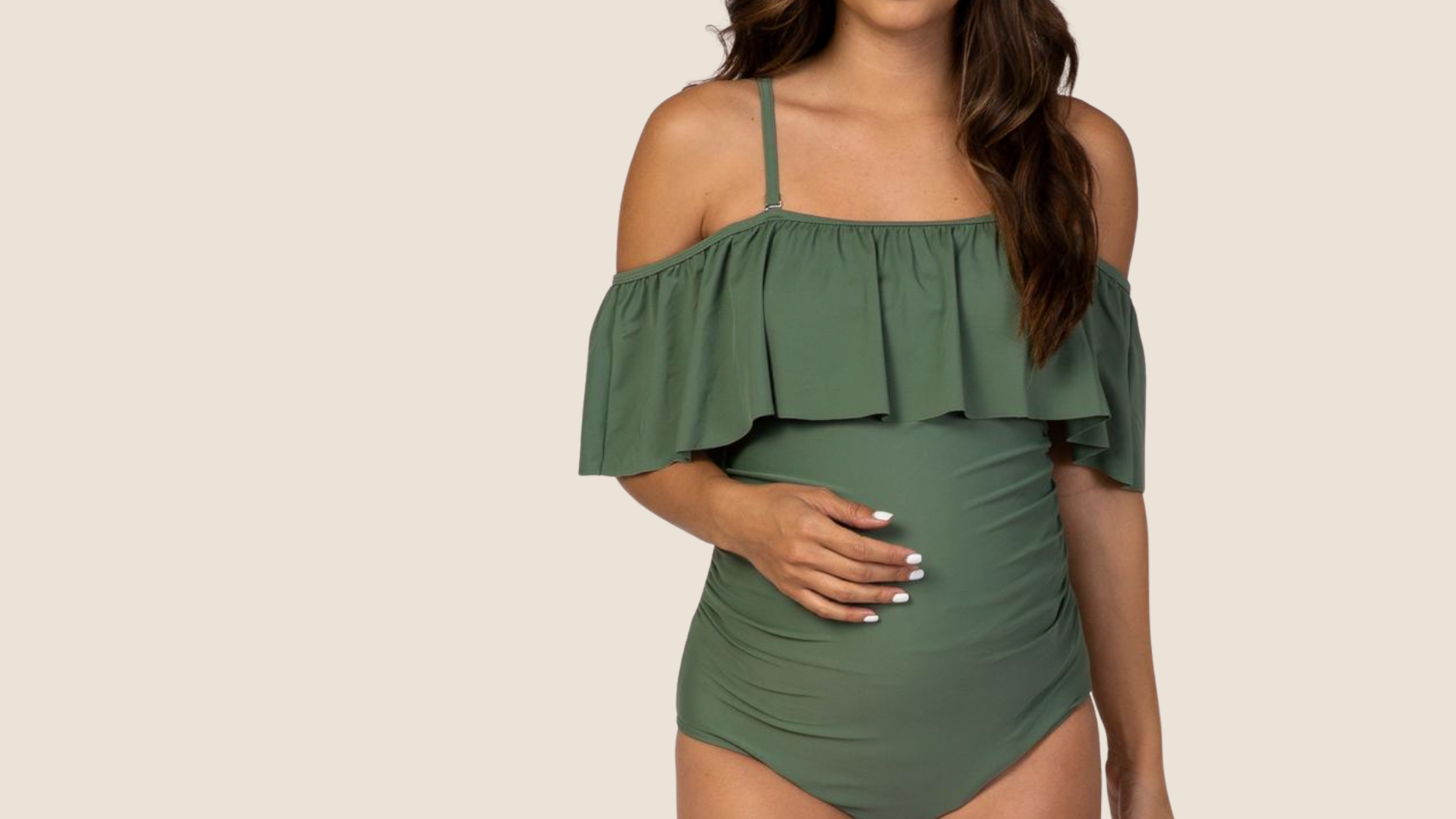
2. PinkBlush Olive Ruffle Trim Ruched Onepiece - $49
Looking to add a little flare to your swimwear? This ruffled suit fro PinkBlush flatters the stomach area with it’s ruched detail and comes in a variety of colors. It also offers adjustable, removable straps and double lining.

3. MAMA Swimsuit - $35
This sleek swimsuit from H&M, made of recycled materials, features scalloped, laser cut edges and concealed elastic below the bust for added support. The gatherings along the sides of the suit allow for a better fit over the stomach area. It comes with removable cups for shaping and support, too!

4. Palm Print Tankini - $59
This tropical tankini swimsuit from Seraphine is a great choice for moms-to-be who are looking for a two-piece suit that still offers support and adjustability throughout their pregnancy. Ruched sides, a supportive bust band, optional cup padding, and under-bump bottoms to leave you feeling cute and flatter figured everytime you wear it.
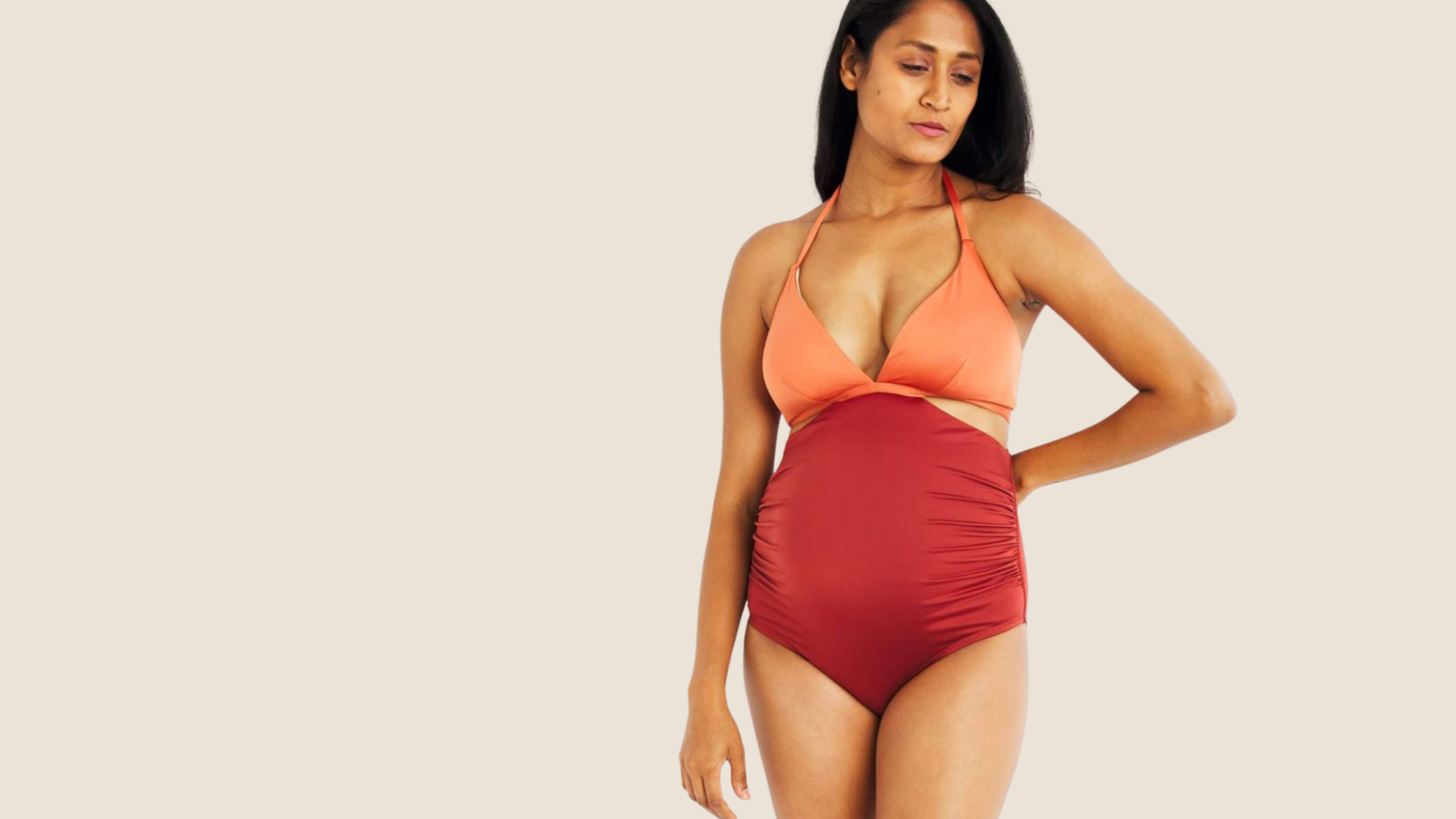
5. Cut-out Maternity Onepiece Swimsuit - $87
This cut-out swimsuit from A Pea In The Pod is stylish and protective, with UPF 50+ material to protect your bump from harmful UV rays. It’s a sleek and stylish choice for hanging poolside, but comes at a premium price. The Colors and sizing are currently limited.

6. Beach Bump High-waisted Maternity Set - $42
On the hunt for a bikini set for your bump? Look no further! This high-waisted bikini set from Motherhood is adorably designed with maximum protection and comfort in mind. The materials feature UPF 50+ protection and elastic fabric that can fit you perfectly from your first trimester to your last.
Lookin’ for a poolside mocktail to help you beat the summer heat? Check out our list of healthy, delicious mocktail recipes to make this summer a special one.
The Top 5 Fertility Tracking Apps 2021
Getting pregnant doesn’t always happen by chance. Fertility tracking tools make planning for pregnancy and tracking your period easier to do. There are many fertility tracking apps these days, but these are the top 5 fertility tracking apps you can count on in 2021:
Getting pregnant doesn’t always happen by chance. In fact, many couples will likely find themselves trying for a few months or longer before becoming pregnant, and the window for a woman to do so lasts only 6 days on average each month.
Luckily, modern technology has created fertility tracking tools that make planning for pregnancy and tracking your period easier to do. There are many fertility tracking apps these days, but these are the top 5 fertility tracking apps you can count on in 2021:
Clue
Backed by science-driven algorithms, Clue helps women track everything from their cycle and emotions to their sleeping levels. Add in details, track your days, and monitor your chance of pregnancy at any point in time. As a bonus, Clue offers a pregnancy tracker which allows women to log their pregnancy symptoms pre and postpartum.
Ovia
This 100% free app allows you to track and download your data easily. It creates fertility window predictions based upon your daily health and symptoms and provides you with a percentage of likelihood to conceive each day of the week.
In addition to fertility, you can also use the app to track your fitness, eating, sleeping, and mood throughout each month. With Ovia you can easily share your information with your partner by data syncing within the app.
Flo
Flo uses an alternative approach to fertility tracking compared to other apps. Rather than using an algorithm to predict fertility levels, the app uses AI to “get to know you” based upon your daily symptoms. This is a great option for women with irregular cycles who may contradict the average fixed algorithm.
Cycles
Simple graphics and soothing colors collide in this ultra-customizable period tracking app. It’s designed to bring you and your partner together with built-for-two functionality and syncing. Your partner can view your daily health and moods and be better equipped to support you throughout both fertility and your monthly cycle.
Glow
Glow is a free app that tracks your ovulation and everyday symptoms, such as your mood, sexual activity, and more. It allows you to have an accurate account of your fertility and cycle, while detecting personal patterns in your health.
Are you pregnant or trying to become pregnant? If so, consider your prenatal care options. If you have questions, concerns, or inquiries please contact us or schedule a free consultation by calling 513-399-7263.
Fact or Fiction: Debunking 4 Common Pregnancy Myths
When it comes to pregnancy, there are endless “shoulds” and “shouldn’ts” that will be thrown your way. Picking through the seemingly endless conflicting information and advice that’s out there can be difficult. Expert midwife, doula, lactation consultant, and owner of Cincinnati Birth Center, Meghan Nowland, weighs in on common care myths:
When it comes to pregnancy, there are endless “shoulds” and “shouldn’ts” that will be thrown your way. Picking through the seemingly endless renditions of prenatal health articles, blogs, and books can feel overwhelming. With all the conflicting information and advice that’s out there, it can be difficult to understand what’s fact from fiction.
Expert midwife, doula, lactation consultant, and owner of Cincinnati Birth Center, Meghan Nowland, weighs in on common care myths:

MYTH #1: You shouldn’t eat raw eggs during pregnancy.
The Truth: Your chances of food poisoning during pregnancy are highest when consuming unwashed fruits and vegetables, but we wouldn't want you to avoid those. When it comes to eggs, experts say that the risk of expecting moms getting salmonella is minimal and no different from the risk of getting salmonella any other time. Eggs are a great source of protein during pregnancy and contain important nutrients such as key vitamins, minerals, and good fat. While pregnant, try purchasing quality eggs (pastured are the best) and eat them however you like them best.

MYTH #2: You shouldn’t eat soft/raw cheeses during your pregnancy.
The Truth: Most cheeses are completely safe to eat throughout your pregnancy. However, you should purchase good quality, pasteurized cheeses only. Avoid soft/raw cheeses that imported or that you aren’t certain are pasteurized. Unpasteurized cheeses can be contaminated with listeria, a harmful bacteria that can cause listeriosis.

MYTH #3: You shouldn’t lose weight during pregnancy.
The Truth: Losing weight during pregnancy can be normal, especially during the first trimester if you are experiencing nausea and food aversions. If you are overweight when you begin your pregnancy, you also may lose some weight if you modify your diet to fit your body's needs. If you notice a change in your weight during pregnancy, talk with your primary care provider.

MYTH #4: Using cannabis will cause harm to your baby.
The Truth: There is mixed evidence regarding cannabis’ effect on pregnancies. The most significant difference doctors have noticed with mothers who smoke is many of their babies having lower birth weights than non-smoker births. Some benefits of cannabis use during pregnancy, if you’re a previous user, are positive effects on nausea, appetite, sleep, and depression. Again, before using cannabis while pregnant be sure to discuss it with your primary care provider.
Looking for more prenatal health advice?Read our blog on immune boosters that are safe to use during pregnancy orcontact us to learn more about our prenatal services.