
Epidurals During Labor: Pros and Cons

The Epidural Through History

Using epidurals for pain relief during childbirth can be traced back to the early 20th century. In 1901, the use of anesthetics in the epidural space was first reported. Fidel Pagés was a pioneer of the epidural, promoting it for surgical purposes through his article published in 1921.

However, it wasn't until the 1970s that epidurals gained popularity for labor due to advancements in medical technology and improvements in technique. The development of the epidural catheter allowed for a continuous flow of anesthesia, enhancing control over pain relief during labor. This marked a new era in the history of childbirth, as more women began to consider epidurals as a viable option for managing labor pain.

Throughout the latter half of the 20th century and into modern years, the number of women using epidurals has continued to rise. Today, around 70% of laboring women use an epidural. As childbirth has shifted into hospitals and become more and more of a medical procedure, many women see the epidural as a non-negotiable and as the “normal” way to manage labor pain.

Pros and Cons of Epidurals

Pros:

  • Pain Relief: Epidurals are very effective in easing pain, allowing mothers to get more rest during labor and feel less exhausted. For a mother anxious about childbirth pain, an epidural may look very appealing.

  • Flexibility: Epidurals provide a more controlled and adjustable pain relief approach, with the ability to administer additional medication if necessary.

  • Easier Medical Interventions: The pain relief provided by epidurals can facilitate medical interventions such as forceps or vacuum-assisted delivery if complications arise.

Cons:

  • Reduced Mobility: Epidurals limit a woman's ability to move and change positions during labor, often slowing down natural progression. Walking, standing, and swaying are some of the best ways to speed up labor.

  • Increased Risk of Medical Interventions: When labor is slowed down, there is a higher chance you will require medical interventions to help it progress. Pushing is sometimes more difficult with an epidural in place, so this can increase the risk of needing forceps, vacuum-assisted delivery, or a c-section.

  • Potential Side Effects: Epidurals can lead to side effects such as low blood pressure, back pain, headache, and nausea - see next section for more information.

  • Worse Postpartum Recovery: Many women complain of experiencing a worse recovery period due to their epidural. Epidurals can often increase the risk of tearing since a doctor has to guide you when to push and you aren’t able to listen to your body.

  • Pain Medication in Baby’s System: A small amount of the epidural does cross over and enter the baby’s system, remaining there for at least the first 30 days of life.

  • Possible Breastfeeding Issues: Exposure to pain medication often dulls a baby’s initial feeding behaviors. Epidurals also inhibit the mother’s release of natural oxytocin and can delay the milk coming in.

Common Epidural Side Effects

While epidurals are generally considered safe, women often experience side effects, including:

  • Low Blood Pressure

  • Headache

  • Nausea and Vomiting

  • Back Pain

  • Perineal Tearing / Swelling

  • Urination Problems

  • Elevated Temperature

It’s true, epidurals are effective in reducing labor pain - but there are several natural pain management techniques to consider that allow you to avoid unwanted side effects and feel empowered by using your own strength. 

Anna’s Birth Stories with the CBC

Birth #1 - A Christmas Gift

I found out I was pregnant right in the middle of Covid in 2021. I had always assumed I would have a hospital birth, at least with my first, but all the rules surrounding the virus made me hesitate. Would we be exposed to the virus at a hospital? Would I be separated from my baby if I tested positive? Would family even be allowed to be with me?

I started to explore home birth as an option and started researching the best midwives in my area.

Enter Meghan, a calming presence whose knowledge about all things childbirth set me right at ease. Prenatal appointments at the Cincinnati Birth Center offered a serene, tranquil environment, and I was so happy with my decision to have a natural birth at home.

Fast forward a few months to Christmas Eve night when I thought I was feeling signs of early labor. When I woke up at 12am Christmas morning, I KNEW today was the day! My doula and mother-in-law came over right away to give their support and we worked through contractions together. 

After a couple hours of pacing, swaying, and using an exercise ball, I felt we should call Meghan - in my inexperience, I thought that these contractions were intense and meant baby was almost here! Meghan came over right away to check me out…  and I was disappointed to learn I was only 3cm dilated. 

Meghan left with instructions to call her when labor ramped up more and I tried to catch some sleep between contractions (easier said than done!). My husband never slept more than ten minutes during my whole labor - he massaged my back, helped me take a warm shower, and held my hand as the pain got worse.

Mid-morning marked the turning point as labor definitely progressed, prompting us to call Meghan again. This time she arrived with her birth assistant, India, and they immediately prepped for the delivery of my little girl. Reality started setting in! But I barely had time to process anything with contractions stealing my focus at only 1-2 minutes apart. I labored on the bed and tried different positions, but didn’t feel the urge to push yet.

At some point, I stood up to encourage the baby’s descent - and my water instantly broke. Two intense hours of pushing followed – and believe me, it’s nothing like in movies! It turns out that the baby was in a compound presentation, where her hand was next to her head in the birth canal. This caused some difficult pushing and delivery. But the moment my baby girl was placed in my arms, I just felt the relief and joy of holding Lily Renae, my little Christmas gift.

Birth #2 - Born in the Water

Two years after my first was born, I found out I was pregnant with my second little girl! I knew I wanted to have the midwives at CBC perform the delivery again, and called them up right away.

Since I had already experienced a home birth, I felt much more confident this time around and decided I wanted to experience water labor with this delivery.

Two weeks before my due date, I started having regular mild contractions that lasted all day - I was sure I was going into early labor and alerted Meghan. My in-laws picked up my toddler for a “sleepover” and I waited all day for the labor to progress. After a full day of mild contractions, they finally petered out that night. False alarm - I had been tricked by prodromal labor and baby girl didn’t have any plans of making an appearance yet.

The next two weeks seemed to drag on, but finally my due date came… and went. That night I ate the spiciest food I could handle and did lunges, stair walking, and bounced on an exercise ball. Did any of that induce labor? I’ll never know for sure, but the next morning at 6:45am I woke up with very real contractions.

They progressed quickly within the next hour, so after we got our toddler some breakfast and packed to go hang out with grandpa, I called Meghan knowing I would need assistance soon.

Around 10am, I knew things were going much faster than they had with my first birth. Meghan was already at another birth that morning, so India came over with her assistant. India is wonderful, and instantly put me at ease with her encouraging presence.

We got our birthing pool set up - unfortunately, it was defective out of the box and wanted to leak air. But it was nothing my husband, mother-in-law, and duct tape couldn’t handle! I couldn’t believe how RELAXING the water was, and I swore I’d never labor any other way in the future!

A couple of hours passed, and the contractions intensified much faster than I expected. When I saw India and her assistant sharing a nod, I knew we were almost at the finish line. Sure enough, I got a massive urge to push. A few minutes later and the baby was crowning and we could see her head! After a couple more pushes that didn’t do anything, India had me change positions to hands and knees, which instantly brought the baby down and out with the next push.

The relief post-birth was just as great as the first time, and it was just as magical having Evangeline Rose placed in my arms. Every birth is unique, but it was especially exciting to find out she was born “en caul”, meaning she had the amniotic sac still intact over her head - a rare event that only occurs every 1 in 80,000 births!

I couldn’t wait for her and her sister to meet later that day - my two home birth babies, a route I’ll always be so thankful I took.

Best Sources of Folic Acid

Folic acid is a water-soluble B-vitamin, also referred to as vitamin B9. It plays a fundamental role in many physiological processes, especially in the synthesis and repair of DNA and the formation of red blood cells. During pregnancy, a good source of folic acid is essential for the proper development of the neural tube, which eventually forms the baby's brain and spinal cord. 

However, getting the folic acid you need is not necessarily as simple as getting it through your prenatal supplement. Research has shed light on the MTHFR gene mutation and its implications for the absorption of synthetic folic acid that is found in prenatal vitamins.

Understanding the MTHFR Mutation

MTHFR, or methylenetetrahydrofolate reductase, is a gene responsible for producing an enzyme crucial in the conversion of folic acid into its active form, 5-MTHF (5-methyltetrahydrofolate). This active form is essential for various biochemical processes in the body, including DNA synthesis and repair.

A significant portion of the population carries the MTHFR mutation, with at least 50% carrying the mutation on one or both genes, likely more. This mutation can impact the body's ability to convert synthetic folic acid into the active form, leading to concerns about its effectiveness in preventing neural tube defects during pregnancy.

While prenatal vitamins are commonly recommended to meet the increased nutritional needs during pregnancy, the MTHFR mutation complicates matters. Synthetic folic acid, found in most prenatal supplements, may not be effectively converted into the active form in individuals with the mutation. 

Natural Sources of Folic Acid

So if there is a strong likelihood that your body cannot properly absorb folic acid in its synthetic form, how can you make sure you get enough of this important nutrient while pregnant? 

We recommend trying to get as much of your folic acid intake from whole foods as possible. Not only does this provide your body with many other needed nutrients, but you will be able to process folic acid more efficiently.

Benefits of Using Natural Sources for Folic Acid

  • Improved Absorption: Unlike synthetic folic acid, the naturally occurring form is easily absorbed by the body, ensuring it is used more efficiently.

  • Whole Food Nutrients: Food sources of folic acid come packaged with other essential nutrients, promoting a balanced and wholesome approach to nutrition during pregnancy.

  • Reduced Risk of Overconsumption: Obtaining folic acid through natural sources minimizes the risk of overdosing, a concern associated with excessive supplementation.

Food Sources of Folic Acid

  • Leafy Greens: Incorporating leafy greens like spinach, kale, and broccoli into your diet provides a rich source of naturally occurring folate.

  • Legumes: Beans, lentils, and peas are excellent plant-based sources of folic acid, offering additional nutritional benefits.

  • Grass-Fed Beef Liver: Beef liver is a concentrated source of folic acid and is easy to take via organic pill supplements.

  • Citrus Fruits: Oranges, grapefruits, and other citrus fruits are not only rich in vitamin C but also contain folic acid.

Nature is usually the best medicine, but often overlooked. Natural sources, such as leafy greens, legumes, and citrus fruits, offer a reliable and well-absorbed alternative to synthetic supplements. When in doubt, opting for nature's provisions ensures a direct and effective approach to meeting the nutritional needs of the body.

Visit our wholesale account at Wellevate to look for folic supplements such as grass-fed beef liver to add to your diet.

Tiny Tummies: How to Relieve Baby Gas Pains

As a parent, seeing your little one crying in discomfort and pain is one of the most challenging aspects of caring for a newborn, and can leave you feeling helpless and desperate to provide relief. One common culprit behind fussiness is often baby gas pains, a discomfort that many infants experience due to their newly developing digestive systems. This is often a contributing factor to colic - the word every parent dreads hearing. So whether your baby seems to be experiencing some discomfort or has full-on colic, keep reading for ways that might provide relief.

Causes of Baby Gas Pains

Gas pains happen to most infants and can be traced back to many different factors. The most common causes include:

  • Immature Digestive System: A newborn's digestive system is still developing, making it more prone to gas-related discomfort.

  • Swallowing Air: Babies often swallow air while feeding, crying, or sucking on pacifiers, leading to the accumulation of gas in their tiny tummies.

  • Dietary Factors: Breastfed babies can experience gas pains if their mothers consume certain gas-inducing foods like cabbage, broccoli, or dairy. In this case, you may want to try an elimination diet to see if that resolves the issue (keep reading below). For formula-fed infants, gas may result from difficulty digesting certain proteins.

  • Fast Feeding: Feeding too quickly can cause babies to ingest air along with their milk, contributing to gas issues. If your baby is spitting up large amounts after most meals, or even vomiting, they may be eating too quickly or too much. 

  • Tightness: Sometimes babies are “tight”, meaning they hold extra tension in their little bodies. Birth and delivery are hard work for the baby too, and often creates tension that can contribute to gas pains. If you notice your baby constantly arching their back, clenching, or extending, you may want to consider chiropractic newborn care or infant massage.

Natural Methods to Relieve Baby Gas Pains

  1. Burping: Burn your baby during and after feeds to release swallowed air. Hold your baby upright against your chest and gently pat or rub their back. If this doesn’t release the air, try sitting your baby up on your lap with your hand on their chest. Lean your baby forward with your thumb and forefinger supporting their jaw and pat their back.

  2. Correct Feeding Techniques: Whether breastfeeding or bottle-feeding, ensure a proper latch and a slow, steady flow of milk to prevent excess air intake. If your let down is too fast, try hand-expressing a small amount before feeding your baby.

  3. Tummy Time: Gentle tummy time can help relieve gas by allowing your baby to expel trapped air. Lay them on their tummy for short periods when they are awake and supervised. If they cry and fight tummy time on the floor, you can try laying them on top of you while reclining, or use a nursing pillow so they aren’t face down.

  4. Bicycle Legs: While your baby is lying on their back, gently move their legs in a bicycling motion. Gently push their legs toward their stomach in between cycling. This can help stimulate bowel movements and alleviate gas. 

  5. Warm Baths: A warm bath can relax your baby's muscles and ease digestive discomfort. Ensure the water is comfortably warm and supervise your baby closely.

  6. Herbal Remedies: Some parents find relief using natural remedies like gripe water, which often contains herbs such as fennel, ginger, and chamomile known for their digestive benefits. Always consult with your pediatrician before using any herbal remedies.

  7. Elimination Diet (for Breastfeeding Moms): If breastfeeding, consider eliminating certain gas-producing foods from your diet to see if it improves your baby's symptoms. Dairy is a common culprit, but you may want to try cutting other foods if eliminating dairy does not reduce symptoms.

  8. Infant Massage: Gently rub your baby’s belly in a clockwise motion to move the gas toward the bowel. You can also try using the sides of your palms to make downward strokes on the belly from the ribs to pelvis, each hand following the other in a constant motion. 

  9. Chiropractic Care: Getting your baby adjusted can stimulate nerve flow, reduce gas, and improve the latch through muscle stimulation. Bellies and Babies (located at the Cincinnati Birth Center) is the perfect place for both mom and baby to get the care they need through a gentle, balanced approach.

Zen Mama: Prenatal Yoga for a Healthy Pregnancy

Prenatal yoga is a practice that provides physical and mental support, contributing to a healthier pregnancy. By incorporating gentle stretches, breathing techniques, and relaxation exercises, women can prepare their bodies for childbirth, foster a positive mindset, and promote the health of both mother and baby.

What Are the Benefits of Prenatal Yoga?

  • Feel Better Physically: Prenatal yoga focuses on gentle stretches, strengthening exercises, and breath awareness, which help alleviate common pregnancy discomforts such as back pain, swelling, and fatigue. These exercises also enhance flexibility, promoting a smoother labor and delivery process.

  • Balance Fluctuating Emotions: Hormonal fluctuations during pregnancy can lead to mood swings and increased stress levels. Prenatal yoga incorporates mindfulness and relaxation techniques, fostering emotional well-being. By connecting with your breath and practicing meditation, you can reduce anxiety, cultivate a positive mindset, and enhance your overall emotional resilience.

  • Strengthen Your Pelvic Floor: Prenatal yoga includes specific poses that target the pelvic floor muscles. Strengthening these muscles is beneficial for supporting the weight of the growing uterus, improving posture, and preparing the body for childbirth.

  • Connect With Your Baby: Through gentle movements and mindful breathing, prenatal yoga encourages a deep connection between the mother and her growing baby. This bonding experience contributes to a positive emotional environment for both mother and child.

What Kinds of Yoga to Avoid

While prenatal yoga is generally safe and beneficial, some styles may not be suitable for pregnant women. High-intensity practices, hot yoga, and styles that involve lying on the back for extended periods should be avoided. Make sure you consult with your healthcare provider and inform your yoga instructor about your pregnancy to practice yoga safely.

Prenatal Yoga Poses to Try

  1. Mountain Pose

    • Stand with your feet hip-width apart, toes pointing forward.

    • Distribute your weight evenly on both feet, engaging your thighs and lifting your chest.

    • Relax your shoulders away from your ears, and bring your palms together in front of your heart or let your arms hang by your sides.

    • Focus on your breath and maintain a steady, balanced posture.

  2. Cat-Cow Stretch

    • Start on your hands and knees in a tabletop position, wrists aligned under shoulders and knees under hips.

    • Inhale, arch your back, and lift your head and tailbone for Cow Pose.

    • Exhale, round your spine, tuck your chin to your chest, and engage your pelvic floor for Cat Pose.

    • Flow smoothly between Cat and Cow, coordinating each movement with your breath.

  3. Child's Pose

    • Kneel on the mat with your big toes touching and knees wide apart.

    • Sit back on your heels, extending your arms forward and lowering your chest toward the mat.

    • Rest your forehead on the mat, allowing your belly to fit between your thighs.

    • Breathe deeply, relaxing into the pose and feeling a gentle stretch in your hips and back.

  4. Warrior II

    • Start in a standing position, step one foot back, keeping the front knee bent over the ankle.

    • Extend your arms parallel to the floor, reaching in opposite directions.

    • Open your hips and chest toward the side, maintaining a strong and stable stance.

    • Gaze over the front fingertips and breathe deeply, feeling the strength in your legs and openness in your hips.

  5. Goddess Pose

    • Stand with your feet wider than hip-width apart, toes turned outward.

    • Bend your knees and sink into a deep squat, keeping your knees in line with your ankles.

    • Bring your palms together at your heart or extend your arms out to the sides.

    • Engage your pelvic floor and feel the strength in your thighs and core.

  6. Puppy Pose

    • Start in a tabletop position, then walk your hands forward, lowering your chest toward the mat.

    • Keep your hips over your knees and your arms extended, allowing your forehead to rest on the mat.

    • Feel a gentle stretch in your spine, shoulders, and chest, and breathe deeply.

  7. Supported Bridge Pose

    • Lie on your back with knees bent and feet hip-width apart.

    • Place a block or bolster under your hips, lifting them off the mat.

    • Keep your shoulders grounded and relax your arms by your sides.

    • Breathe deeply, feeling a gentle opening in your chest and hips.

  8. Legs Up the Wall Pose

    • Sit sideways with your hip against the wall, then gently swing your legs up the wall as you lie on your back.

    • Place a folded blanket or bolster under your hips for support.

    • Extend your legs up the wall, keeping them relaxed.

    • Breathe deeply, enjoying the inversion and promoting relaxation.

Choose Your Birth Story with Natural Birthing Positions

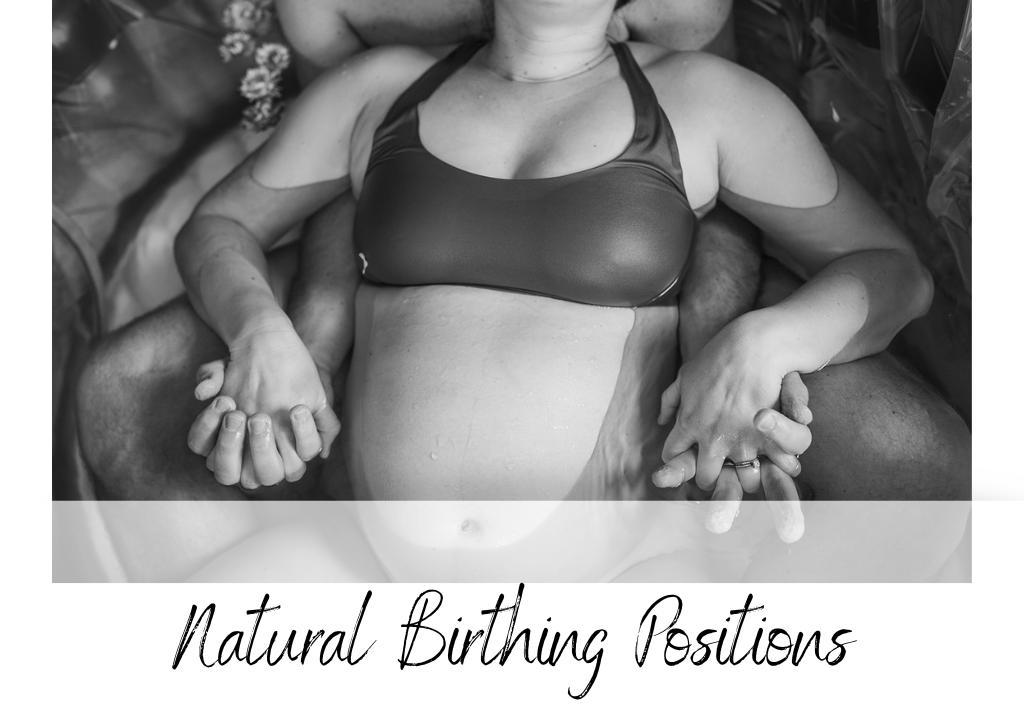
Natural birthing positions allow mothers to connect with their bodies and embrace instinct to guide them through the process of delivering a baby. Trust that your body knows what it is doing. Adopting a natural position lets you lean into a more intuitive and physically beneficial birthing experience.

Natural vs. Traditional Birthing Positions

Natural positions for labor and delivery tend to need less medical interventions and put less stress on the mother and baby. Since most of these positions work with gravity, they create a more efficient and speedy labor. Other benefits include:

  • Reduced Tearing:

    • Natural positions facilitate a smoother descent for the baby, reducing the likelihood of tearing and minimizing trauma to the perineum.

  • Optimal Fetal Positioning:

    • These positions encourage the baby to align itself in the most favorable position for birth, enhancing the efficiency of the birthing process.

  • Empowerment and Comfort:

    • Natural birthing positions empower mothers to actively participate in the birthing process, fostering a sense of control and comfort.

Traditional positions, such as the supine (lying on the back) or lithotomy (legs in stirrups) positions are commonly advocated in hospital settings. While they are convenient for medical staff, these positions often work against gravity, potentially prolonging labor and increasing discomfort.

Traditional positions are also often associated with a higher likelihood of medical interventions, including episiotomies and assisted deliveries. While medical interventions are sometimes necessary, routine “one-size-fits-all” approaches can lead to unnecessary interventions.

The Best Positions for Natural Birth

Contrary to traditional birthing positions pushed by many hospitals, such as lying on the back, natural birthing positions recognize the body's inherent design for bringing new life into the world. These positions create an ideal space for the baby to exit, reduce the possibility of tearing, and allow you to feel as comfortable as possible.

1. Squatting:

In the squatting position, gravity works in your favor, allowing the baby to descend more easily. This position widens the pelvic outlet, reducing pressure on the perineum and decreasing the likelihood of tearing. Many mothers find that squatting on the toilet speeds up the process since their pelvic muscles are used to working in that position.

2. Hands and Knees:

Adopting a hands-and-knees position can ease back pain and provide optimal positioning for the baby to navigate through the birth canal. Going on your hands and knees reduces pressure on your spine and opens up the pelvis, creating a more comfortable and efficient labor.

3. Standing or Leaning Forward:

Remaining upright and leaning forward encourages the baby to move down the birth canal, taking advantage of gravity. This position often leads to a more open pelvic inlet, reducing the strain on the perineum and minimizing the risk of tearing. You can hang onto your partner for support or lean against the edge of your bed or other prop.

4. Side-Lying:

The side-lying position is a comfortable alternative that promotes optimal fetal positioning. It may reduce the intensity of contractions, allowing the mother to conserve energy for the pushing stage. It also relieves stress on the perineum, which minimizes tearing.

Home Birth VS Birth Center - Which is Right for You?

You’ve decided you want a natural birth experience with minimal interventions and a midwife as your caregiver. But what are your options for where to give birth?

Most natural births will either take place in your own home or at a birthing center, and the Cincinnati Birth Center is thrilled to be able to offer BOTH choices to expecting mothers! But how do you decide which location is right for you? Ultimately, the answer is wherever you feel the most comfortable giving birth. 

To help you make your choice, let’s take a quick dive into what makes home birth and birthing centers unique.

Benefits of a Home Birth

A home birth is exactly what it sounds like – giving birth in the comfort of your own home, often attended by a certified midwife and a trained doula. Here are some of the benefits to consider when contemplating a home birth:

  1. Comfort and Familiarity: Giving birth at home allows you to be in a familiar environment, which can help you relax and have a sense of security. You have control over your surroundings -  from the lighting to the music - creating a personalized and comfortable atmosphere. It’s also a more inclusive way to have older children, other family members, and anyone else present at the birth without getting outside permission.

  2. Use Your Own Supplies: While your midwife will bring needed supplies and possibly a birthing pool, you have the freedom to purchase/use your own supplies, use your own shower, and have access to anything else of yours as desired. 

  3. Personalized Care: Your midwife and/or doula will provide continuous one-on-one care, offering support and guidance throughout your labor and delivery. This personalized attention can be reassuring for many.

  4. No Unnecessary Interventions: If you wish for minimal interventions during your labor, have a low-risk pregnancy, and feel confident in your body’s innate ability, a home birth can be one of the most empowering events you will ever experience. 

Benefits of a Birth Center

A birthing center is a midwife-led, home-like facility designed for childbirth. It's distinct from a hospital environment and offers a balance between a home birth and a traditional hospital birth. Here's what you can expect with a birthing center:

  1. Home-Like Environment: Birthing centers are designed to create a comfortable, homey atmosphere while ensuring you have access to professional medical care should complications arise. They often feature spacious rooms, birthing pools, and cozy furnishings.

  2. Certified Midwives: The care you receive in a birthing center is led by certified midwives who emphasize a more natural approach to childbirth. If you opt for a birth center, you won’t have to wait for a midwife to arrive at your home, but you can still enjoy being at home for early labor before going to the center.

  3. Lower Intervention Rates: Birthing centers have much lower intervention rates compared to hospitals, making them a suitable choice for parents who want a more natural experience but prefer to give birth at a medical facility.

  4. Emergency Care Close By: Although birthing centers aim to provide a home-like setting and have a low transfer rate, they are equipped to handle emergencies and have a plan for transferring you to a nearby hospital should the need arise.

Which is Right For You?

If you’re still going back and forth on which birthing location is the best fit for you, consider the following:

  • Medical Risk Factors: Before anything else, evaluate your pregnancy's risk factors with your healthcare provider. If you have a low-risk pregnancy, both home births and birthing centers may then be considered.

  • Comfort Level: Consider where you feel most comfortable. Do you prefer the relaxation and familiarity of home or a medical facility with home-like comforts?

  • Support System: Discuss your preferences with your partner, family, or support system. Their input and comfort level may play a big part in your decision.

  • Distance to Hospital: If you choose a home birth, make sure you live within a reasonable distance to a hospital in case of emergencies. If you live far away from the nearest hospital, both you and your midwives may feel more comfortable with using a birth center instead.

  • Cost and Insurance: Investigate the costs and insurance coverage for both options, as they can vary significantly.

  • Legal Considerations: Research any legal requirements and regulations for home births and birthing centers in your area.

Ultimately, the decision between a home birth and a birthing center depends on your personal preferences, risk factors, and the kind of birthing experience you desire. Have open, honest conversations with your midwife and support system to make an informed choice that aligns with your values and needs. Whichever path you choose, the goal is a safe and positive birthing experience for both you and your baby!

10 Ideas to Create a Calm and Relaxing Birth Environment

Home birth is an empowering experience that is starting to appeal to more and more women. For those with low-risk pregnancies, home birth is a beautiful choice for those who desire a more intimate and familiar setting.

What are some ways you can create a calm and relaxing birth environment right inside the comfort of your home?

1. Choose the Right Space

What place in your house makes you feel most at peace? You should choose a birthing room that is spacious, well-ventilated, and private. Many people opt for their bedroom for the convenience of their bed, but if you plan a water birth or other way of giving birth, you might prefer a different room. A space with soothing colors and natural lighting can contribute to a calming atmosphere - make sure the room can be dimmed to create a cozy and serene setting.

2. Declutter and Simplify

Get that nesting mode working for you the last few weeks of pregnancy! A clutter-free environment can reduce stress and create a sense of calm. Declutter the chosen birthing room by removing unnecessary furniture and personal items. This will not only make the space more comfortable but also make it easier for your birthing team to move around.

3. Set the Mood with Lighting

Calming mood lighting - what does that look like for you? Candles, soft string lights, a disco ball… okay maybe not that last one (unless you love it, you do you!), but the right lighting can make or break your calm environment. Natural light is ideal during the daytime, but you should also be able to dim the lights when needed. 

4. Include the People YOU Want

Make sure you decide ahead of time who you want included in your birth, and whether they will be there the whole time, just during labor, or just during the actual birth. Whether you want just your partner and midwife in the room or whether you want your whole family there plus the next door neighbor - make your desires known ahead of time so that there are no hurt feelings in the moment.

5. Use Aromatherapy

Aromatherapy is a powerful tool for relaxation. Try using essential oils like lavender, chamomile, or peppermint to create a calming atmosphere. Diffusers or scented candles can disperse these soothing scents throughout the room and help you relax. Be sure to choose scents that you find personally calming and pleasant.

6. Play Calming Music

Music can have a profound impact on your mood and relaxation. Create a playlist ahead of time of your favorite calming and soothing tunes. Consider sounds of nature, classical music, or meditation tracks. Music can provide a comforting backdrop to your birthing experience and even distract you during contractions.

7. Consider the Senses

Don’t forget about your other senses!Think about textures, tastes, and sounds that make you feel the most relaxed. Provide soft blankets or fabric for touch, have light and nourishing snacks available that you love, and use calming sounds or white noise machines to block out any distractions from the outside world.

8. Use Birthing Affirmation Cards

Affirmation cards contain phrases that help you keep a positive mindset all through labor and remind you that you do have the strength to birth your baby. Look up phrases online or write your own to keep where you can see them or available for someone read to you periodically.

9. Personalize Your Space

Add personal touches to your birthing environment. These could be items that hold sentimental value, such as family photos, artwork, or mementos. Having familiar and cherished items around can make you feel comfortable and secure.

10. Prepare a Birth Plan

First, a disclaimer you are probably well-aware of - births almost never go exactly to plan! However, if writing out a birth plan helps you feel calm going into labor, by all means, have one ready. Plus, they can be helpful in letting others know your desires and vision.

Coping with Sciatica During Pregnancy

If you’ve felt it, you know it - that sharp, shooting pain radiating down your lower back and into your legs. Most expecting mothers experience regular aches and back pain at some point - one study showed 76% of mothers in the trial experienced back pain [1] - but what if you are among those who experience the debilitating pain known as sciatica?

Sciatica is a condition characterized by pain radiating along the path of the sciatic nerve, which runs from the lower back down through the buttocks and into the leg. It’s often caused by the compression or irritation of the sciatic nerve, leading to symptoms such as sharp pain, tingling, numbness, and muscle weakness in the lower back, buttocks, and legs.

Why Does Sciatica Happen During Pregnancy?

It seems like there are enough side-effects of pregnancy without adding one more, especially if it hinders your mobility. So why does sciatica often happen during pregnancy? A handful of factors may contribute to you developing sciatica during pregnancy [2]:

Lumbar Spine Problems - A bulging or herniated disc caused by the growing pressure of the uterus may be the cause behind your sciatica pain. If you already had spinal problems to start with, pregnancy may be exacerbating the issue.

Hormonal Changes - Hormones like relaxin, which help prepare the body for childbirth by relaxing ligaments and muscles, can also affect the stability of the spine and contribute to sciatic pain.

Postural Changes - Pregnancy alters your posture, as your center of gravity shifts forward. This can lead to changes in the curvature of the spine and increased pressure on the sciatic nerve.

Baby's Position - The position of the baby in the uterus can put pressure on the sciatic nerve, especially during the later stages of pregnancy. Sometimes the baby’s head may rest directly on the nerve itself.

How to Handle Sciatica While Pregnant

  1. Consult Your Midwife:

    • The first step in managing sciatica during pregnancy is to consult your midwife. She can help assess your condition, offer guidance, and create a tailored plan to address your specific needs.

  2. Prenatal Exercises:

    • Engage in prenatal exercises that strengthen the muscles supporting your lower back and pelvis. Your midwife can recommend safe exercises and stretches to alleviate sciatic pain.

  3. Pelvic Tilt Exercises:

    • Pelvic tilts can help relieve sciatica by stabilizing your pelvis. Lie on your back with your knees bent and gently rock your pelvis back and forth.

  4. Heat and Cold Therapy:

    • Applying a warm compress or ice pack to the affected area can help reduce inflammation and alleviate pain. Always use a cloth to protect your skin from extreme temperatures.

  5. Supportive Footwear:

    • Wearing comfortable, supportive shoes can help maintain proper posture and reduce the strain on your lower back and pelvis. 

  6. Prenatal Massage:

    • Consider getting regular prenatal massages from a qualified therapist who understands the needs of pregnant women. This can help relax tense muscles and reduce pain.

  7. Proper Body Mechanics:

    • Watch your posture when sitting, standing, and lifting objects. Avoid activities that exacerbate your symptoms.

  8. Sleeping Position:

    • Use a body pillow or pregnancy pillow to support your body while sleeping. Sleeping on your side with a pillow between your knees can relieve pressure on the sciatic nerve.

  9. Alternative Therapies:

    • Some pregnant women find relief from sciatica through complementary therapies like acupuncture or chiropractic care. Find a medical professional who is experienced in helping expectant mothers and who can tailor therapies to your needs.

Sciatica during pregnancy is a challenge, but it is a manageable challenge with the right care and support. By staying proactive, following a plan, and seeking professional guidance, you can reduce the pain of sciatica instead and look forward to the joy of welcoming your new baby into the world.

Natural Pain Management During Home Birth

Pain - one of the first things women tend to worry about when thinking about labor, especially unmedicated birth. Pain levels can vary greatly from person to person and even from one labor to another - there is no guarantee you will have more or less pain than someone else. However, emotions, fear and anxiety can intensify the perception of pain. With this in mind, there are many mental and physical techniques to manage your pain naturally so you can enjoy your home birth the way you’ve always pictured!

Natural Pain Management Techniques

Breathing Techniques

  • Slow, Deep Breaths: Practicing slow, deep breaths can help relax your body and reduce pain. Deep breaths send oxygen to your blood which reduces stress hormones and slows down your heart rate. Inhale deeply through your nose and exhale slowly through your mouth every time you feel a contraction peak.

  • Patterned Breathing: Creating rhythmic breathing patterns can divert your attention from pain. Try techniques like "4-7-8" (inhale for 4 counts, hold for 7 counts, and exhale for 8 counts) or "circular breathing" (continuous inhales and exhales without pausing).

Movement and Position Changes

  • Walking: Taking short walks can promote better circulation, help the baby descend, and relieve pain.

  • Rocking: Gentle rocking motions can ease discomfort and provide comfort.

  • Changing Positions: Try experimenting with different positions, such as squatting, kneeling, or leaning over a birth ball to relieve pressure and pain. Remember to keep your options open, as what works for one person may not for someone else, or something that worked for you in a previous labor may not feel right this time.

Hydrotherapy

  • Warm Bath or Shower: Soaking in a warm bath or standing in a warm shower can relax tense muscles and reduce pain. Many women prefer to labor in a tub for pain relief.

  • Waterbirth: A step beyond laboring in a tub, waterbirth involves staying in the water during the actual birth of the baby. Those who experience waterbirth tend to report lower pain levels than those who push and deliver “on land” (i.e. out of the water) [1].

Massage and Counterpressure

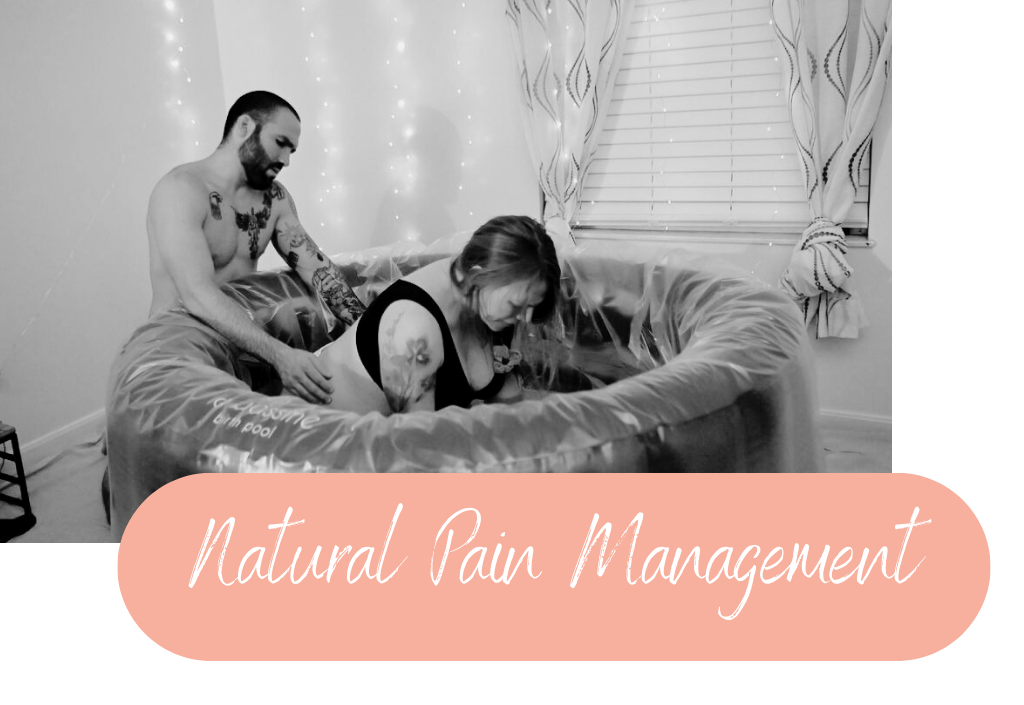
  • Back Massage: Applying gentle pressure to the lower back can alleviate back pain, which is common during labor.

  • Counterpressure: Use a rolled-up towel or a partner's hands to apply pressure on the lower back and hips for the duration of each contraction.

Hypnotherapy and Visualization

  • Guided Imagery: Imagine serene and calming scenes to help you relax and cope with pain.

  • Hypnobirthing: Learning self-hypnosis techniques can enable you to enter a deep state of relaxation and reduce pain perception. Mothers who learn this technique tend to describe feeling pressure rather than pain with each contraction.

Environment

  • Essential Oils: Aromatherapy using essential oils like lavender, chamomile, or peppermint can create a soothing environment and reduce stress [2]. Keeping your mind stress-free is one of the best things you can do for pain relief.

  • Music and Sound: Soothing music or nature sounds are therapeutic if you are interested in what you’re listening to. A person’s favorite music triggers the release of natural pain relieving chemicals in the brain, creating an environment suited to your labor needs.

Finding the Right Techniques for You

How do you know which pain management techniques are right for you? Consider attending childbirth classes to learn about these techniques in-depth and practice them during pregnancy. The more familiar you are with these techniques, the more effective they will be during labor. Keep in mind, however, that labor is unpredictable. Be open to trying different techniques if your initial choices aren’t providing the relief you hoped for.

Remember, the goal is not just to manage pain but to welcome your new baby into the world with love, support, and a sense of empowerment!