


The Only 3 Essential Oils you Need
You open up a bottle of lavender, smell it, and go “Ahhhh” It’s perfect to calm anxiety and soothe nerves.
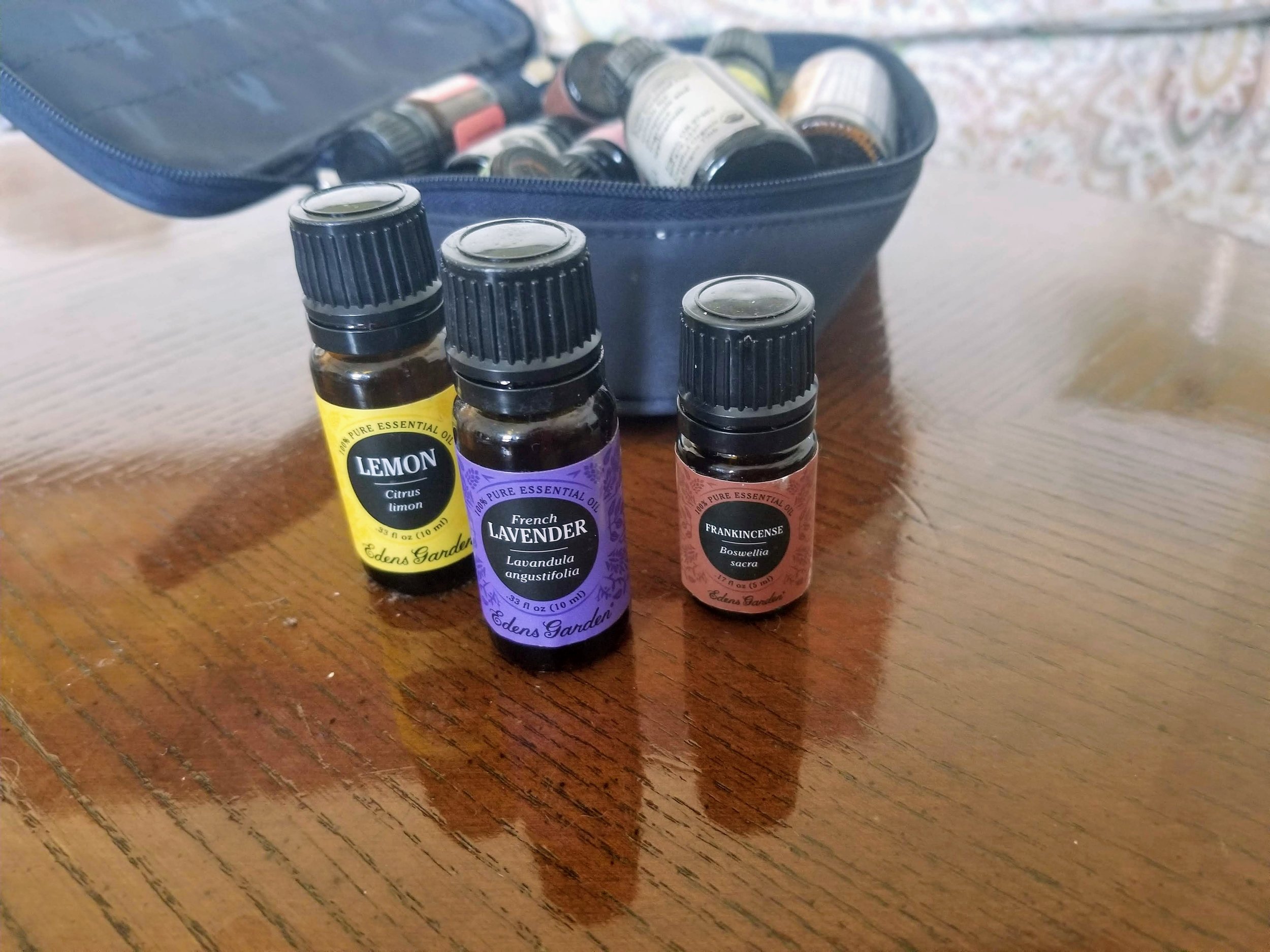
Lavender, lemon, and frankincense essential oils, the only three essential oils you need.
Lemon or other citrus oil (tangerine, bergamot, grapefruit, or sweet orange).
Citrus oils are safe during pregnancy and for children over 3 months. Citrus oils are uplifting. Lemon is a great choice for nausea, or an afternoon pick-me-up. Lemon essential oil can be used to clean and removes odors. It can be added to oil to polish furniture or mixed with water and sprayed to remove bad odors.
The main caution with citrus oils is that they are photosensitive, which means if you wear them on your skin, they will increase your chances of becoming sunburned.
Lavender for letting go.
You open up a bottle of lavender, smell it, and go “Ahhhh” It’s perfect to calm anxiety and soothe nerves.
Lavender was the first essential oil to be studied for it’s medicinal benefits. Lavender promotes relaxation and is wonderful on a cotton ball inside a pillow to aid sleep. Lavender soothes burns. It is safe for children but can cause uterine contractions, so is not to be used during pregnancy until after 37 weeks gestation.
During labor, lavender promotes a feeling of calm and encourages progress in a gentle way.
Frankincense
Of course frankincense always reminds us of the three wise men in the Christmas story. Frankincense has been used for hundreds of years in Ethiopia. Ethiopians use the frankincense sap to fill their homes with a beautiful smoky aroma during their traditional coffee ritual. They also use the smoke of the sap to flavor their butter.
Frankincense is very safe for children and during pregnancy. It is anti-aging, promotes skin integrity, and has been shown to shrink multiple types of cancer, including pancreatic, and skin.
Frankincense can be blended with oils or salves and applied to the skin. I think of it as an oil that creates sacred spaces.
How do you use essential oils? Do you have two or three go-tos?

Eat these 3 Foods to Balance Hormones Naturally
Tired of PMS symptoms? Wondering if you can afford fertility boosting foods? Curious about which foods to incorporate into your Diet? You’ve come to the right place!
Tired of PMS symptoms? Wondering if you can afford fertility boosting foods? Curious about which foods to incorporate into your Diet? Here are 3 suggestions

1. Root Veggies
Root vegetables balance hormones by balancing blood sugar through fiber. Carrots are especially helpful for preventing estrogen dominance. Sweet potato contains compounds that boost progesterone levels. Radishes, onions, garlic, turnips, parsnips, celeriac, and rutabaga balance hormones by providing food for the healthy bacteria in our gut.
Carrots and radishes are easy to eat raw with dips. Turnips, parsnips, and rutabaga are easy to incorporate into soups and stews. Root vegetables can be roasted with olive oil or lard and eaten with sausage, or boiled, mashed, and whipped with butter to make a delicious mashed potato replacement. For extra micronutrients, buy rainbow varieties of carrots, potatoes, and radishes (Trader Joe's is the best grocer I know for making rainbow vegetables available at an affordable price).


